
Agriculture
DOST technology turns waste into livelihood, gives Filipino fibers new life
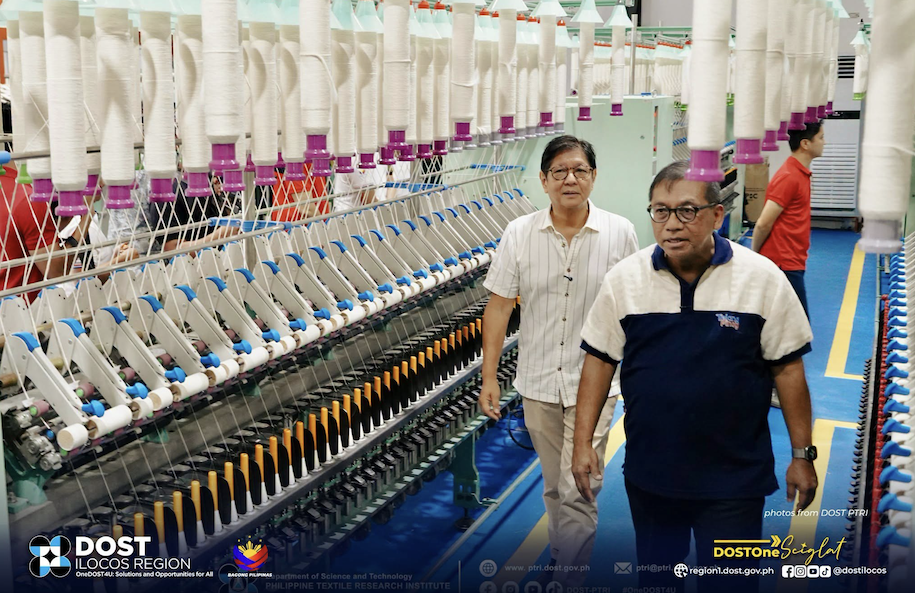
What is sometimes considered waste in the field is now being reimagined as a valuable resource.
In Vintar, Ilocos Norte, the Department of Science and Technology (DOST) is transforming agricultural fibers into yarn and textile products, creating additional livelihood opportunities for farmers and weavers while supporting the local textile industry.
“The directive, through the use of what was previously considered agricultural waste, is to grow the textile industry—the Filipino textile,” DOST Secretary Renato U. Solidum Jr. said.
From farmer to fiber extractor
Through DOST training, rice and vegetable farmers in Vintar learn how to extract fibers from bamboo and other agricultural materials, allowing them to earn beyond traditional crop production.
The technology gives agricultural byproducts added value while enabling farmers to participate in the textile production chain.
From fiber to yarn
The extracted fibers are processed into yarn at the DOST Yarn Production Center in the town, connecting local agricultural production with the weaving industry.
The facility supports the use of locally sourced materials while sustaining traditional Filipino weaving and designs through science-based processing technologies.
Weaving opportunities
The initiative also creates livelihood opportunities for persons with disabilities (PWDs) and other community members.
Weaver Carolyn Sabado shared how DOST training helped beneficiaries gain skills that allow them to earn for their families.
“Before, we just stayed at home. Now we earn and are able to support our parents. We were trained by DOST,” Sabado said.
Building a Filipino textile industry
President Ferdinand R. Marcos Jr. witnessed the DOST-supported activities during his visit to Vintar on August 7, 2026, including the training of farmers in fiber extraction and the operations of the Yarn Production Center.
Marcos emphasized the importance of developing local raw materials and reducing dependence on imported textile inputs.
“Before, we used to even import raw materials. That shouldn’t be the case. We are very capable of doing it ourselves,” the President said.
He also welcomed the establishment of processing centers that allow locally sourced materials to be used while helping revive traditional Filipino designs.
“That’s why it is good that we have built processing centers like this so we can source everything locally. These are our traditional designs. We’re very happy that this industry will be revived,” he added.
The initiative shows how science and technology can connect agriculture, manufacturing, and traditional craftsmanship—turning agricultural waste into high-value products and creating new opportunities for communities. (CCMT/AIHR, PIA Region 1)
Help this knowledge grow
Have additional information, a correction, or a supporting resource for this article?
Try the form and preview your contribution. Nothing is submitted or saved. Closing the form or leaving this page clears your draft.