
Health and Medicine, Research
Leptospirosis-causing bacteria found across Metro Manila creek
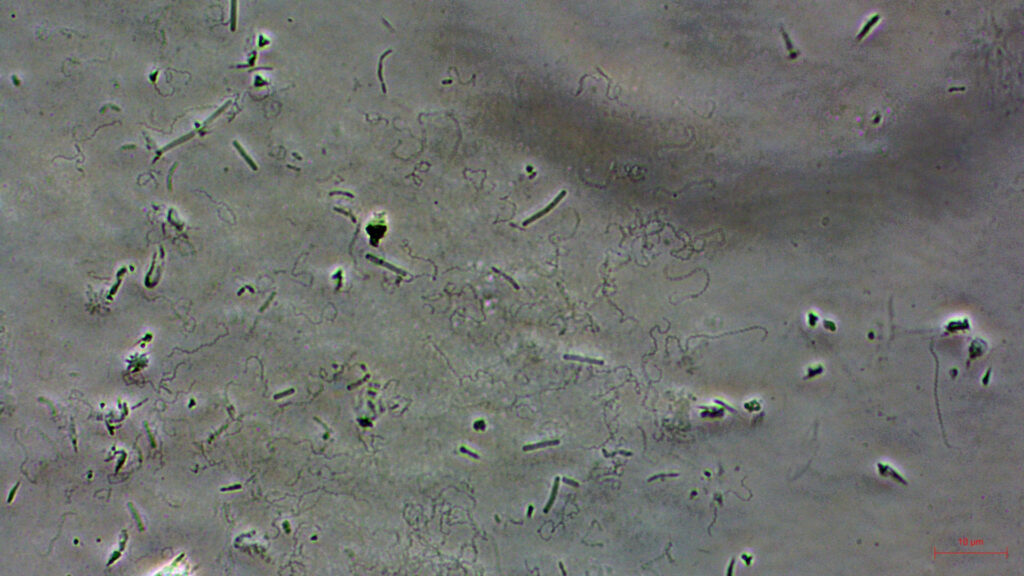
Scientists from the University of the Philippines Diliman College of Science (UPD-CS) and the Philippine Genome Center (PGC) said they found bacteria that cause leptospirosis at all five spots they tested along Estero de Paco, a creek running through Metro Manila.
They also decoded the genetic makeup of a Philippine strain of the bacteria for the first time, according to two peer-reviewed studies.Researchers Ram Julius Marababol and Dr. Windell Rivera of the UPD-CS Institute of Biology’s (IB) Pathogen-Host-Environment Interactions Research Laboratory took soil and water samples from the creek, which passes through crowded communities that often get flooded. They tested 448 bacterial samples.
The bacteria turned up everywhere they looked, upstream and downstream, and in both soil and water, with no meaningful difference between them. This means the contamination is not limited to one visible source and can spread across the whole waterway, the researchers said.
Two of the strains carried a genetic marker commonly linked to disease-causing Leptospira. Genetic testing showed they belong to a species called Leptospira yasudae, which is known to infect both people and animals, according to the studies.
It is the first time the species has been decoded from a Philippine sample. The Philippine strains also differed from the only two other known L. yasudae genomes, from Mayotte, an island near Africa, and Brazil. This suggests the Philippines may have its own local version of the bacteria that science has not yet documented.
In a companion paper published in “Microbiology Resource Announcements,” the researchers reported the first nearly complete genetic map of L. yasudae from Philippine soil. It is only the 10th such map of this species in the world.
“Most people picture leptospirosis risk as something you catch from an obvious flood puddle after a typhoon,” said Marababol, the lead researcher on both studies.
“What our data show is that the bacteria carrying the potential to make people sick aren’t waiting for a flood to arrive; they are already living in the soil and water of an ordinary city waterway, spread evenly across it, all year round,” he said.
“The absence of isolated hotspots is itself the alarming part,” said Rivera, senior author and Marababol’s supervisor at the PGC.
“It means the old model of pointing to one contaminated spot and cleaning it up isn’t going to be enough. If an entire waterway is functioning as a single, connected reservoir, then surveillance and intervention have to be rethought at the scale of the whole system, not a handful of sampling points,” said Rivera.
The researchers said the studies do not show how many people were infected by these strains. They also do not prove the bacteria caused any recent rise in reported cases. They said the findings show that health officials should assume the bacteria are widespread in city waterways when planning disease monitoring for the flood season and warning the public.
Leptospirosis is a bacterial disease spread through contaminated water and soil, and cases tend to rise during the rainy and flood season.
The papers cite public health research saying the disease is “undergoing a marked shift,” with cases climbing in crowded, fast-growing cities with poor drainage, like Metro Manila. In such places, informal settlements, poor waste management and repeated flooding make it easier for the bacteria to pass from animals to people. Many cases also go undiagnosed, so official counts likely understate how many Filipinos are exposed.
The Department of Science and Technology (Project No. 9258) funded both studies, which were conducted at the UPD-CS IB laboratory in partnership with the PGC.
Help this knowledge grow
Have additional information, a correction, or a supporting resource for this article?
Try the form and preview your contribution. Nothing is submitted or saved. Closing the form or leaving this page clears your draft.