
Energy, Technology
Meet the Filipino chemist whose machine turns used cooking oil into P20-per-liter diesel
Every hour, on the hour, the greenhouse had to go dark. Black garbage bags went up to shut out the sun, then came down again, a crude ritual meant to convince a rice plant that a full day and night had passed. At the International Rice Research Institute (IRRI) in Los Baños, the trick had a serious purpose, and Ricardo Felix Capistrano still counts it among the work he is proudest of.
Rice is sensitive to daylight. Shorten its days and it rushes to flower, which means seeds come sooner. The researchers were racing to help Cambodia restore rice varieties it had lost to war, and every shortened cycle brought those varieties closer to home. By his own records, a seed stock of 10 grams grew to 30 kilograms in 28 days.
“This is creative thinking with the sole purpose of helping our ASEAN neighbor,” Ricardo shares with TGFM.
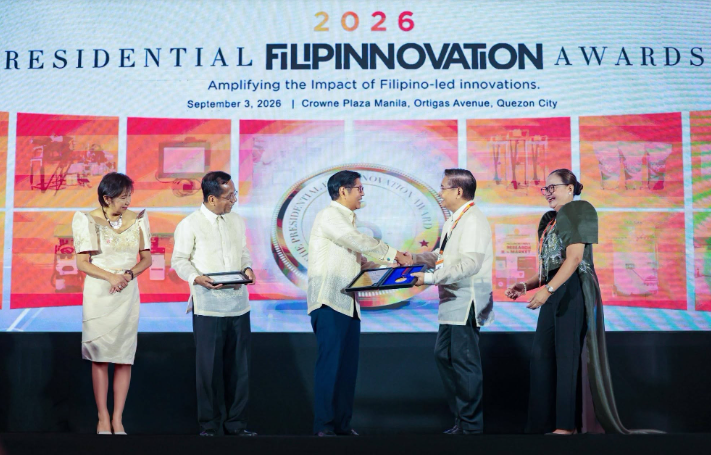
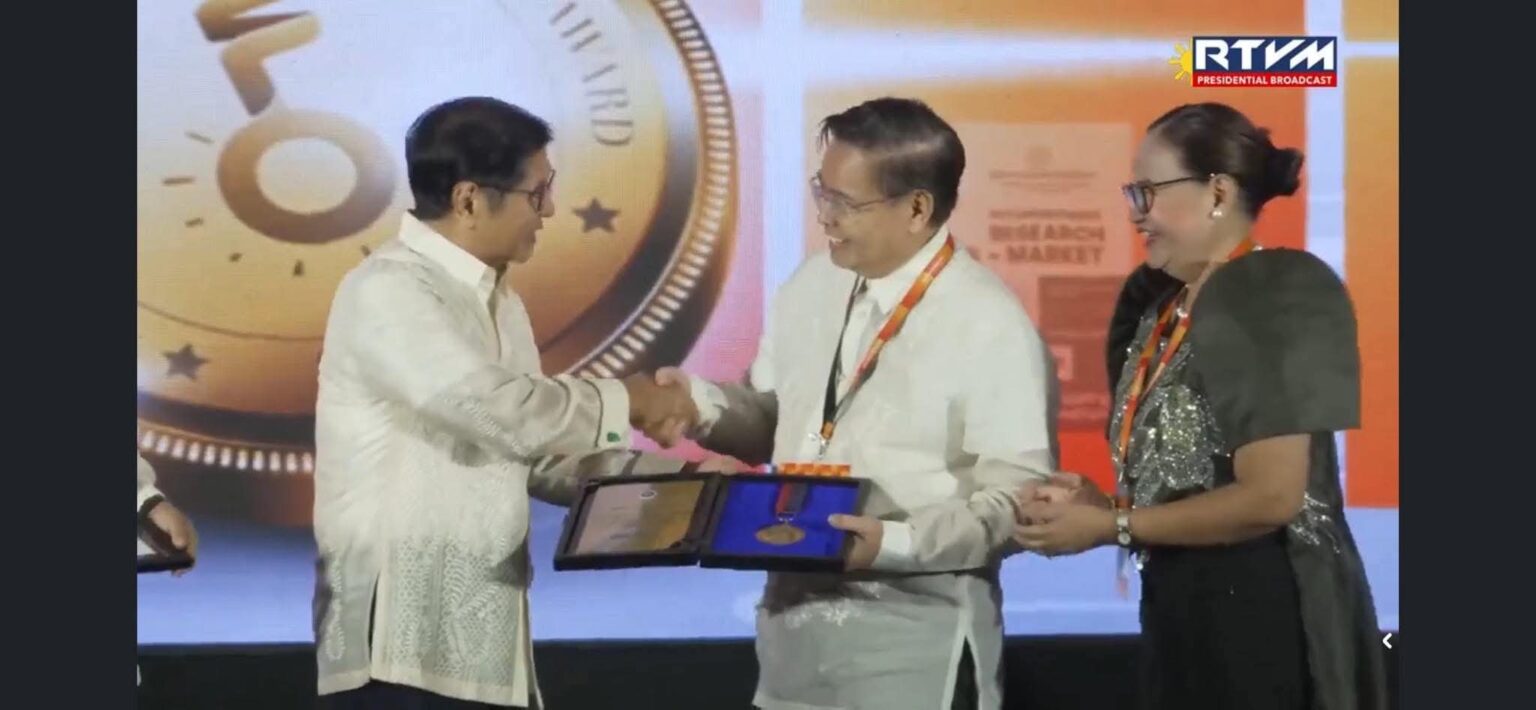
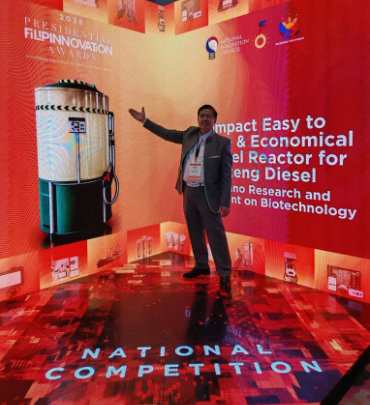
Decades later, the same instinct is pointed at a different crisis. At 67, the chemist is CEO of Capistrano Research and Development on Biotechnology (CRD on Biotechnology) in Calamba City, and his target is the price of diesel. On September 3, 2026, his Compact Easy to Operate and Economical Biodiesel Reactor for Benteng Diesel was named one of five national winners of the Presidential Filipinnovation Awards, the country’s highest recognition for innovation.
A reactor built on a disagreement
The idea started with a sentence Ricardo had heard too many times. Whenever fuel prices climb, he says, officials explain that nothing can be done because the cause is external.
“I don’t agree, because Pinoy always have solutions,” he says.
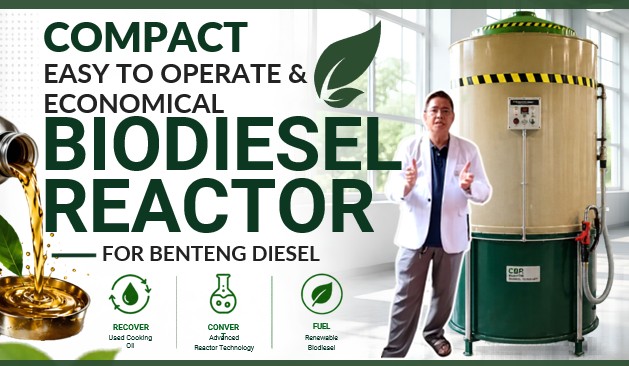
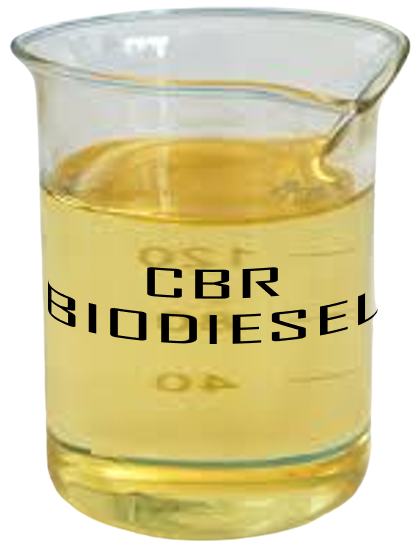
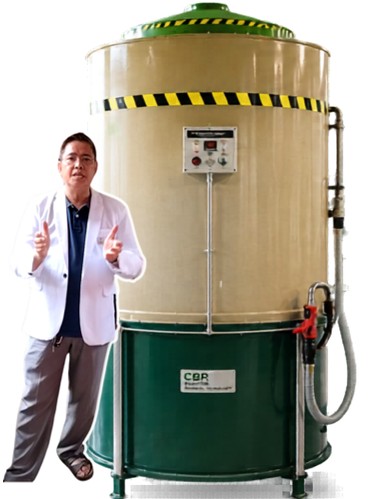
His answer is a reactor that turns used cooking oil into biodiesel. In plain terms, the machine breaks each long oil molecule into three shorter chains, close in length to diesel, and each chain carries oxygen that helps it burn cleaner. It is chemistry and engineering working in the same box.
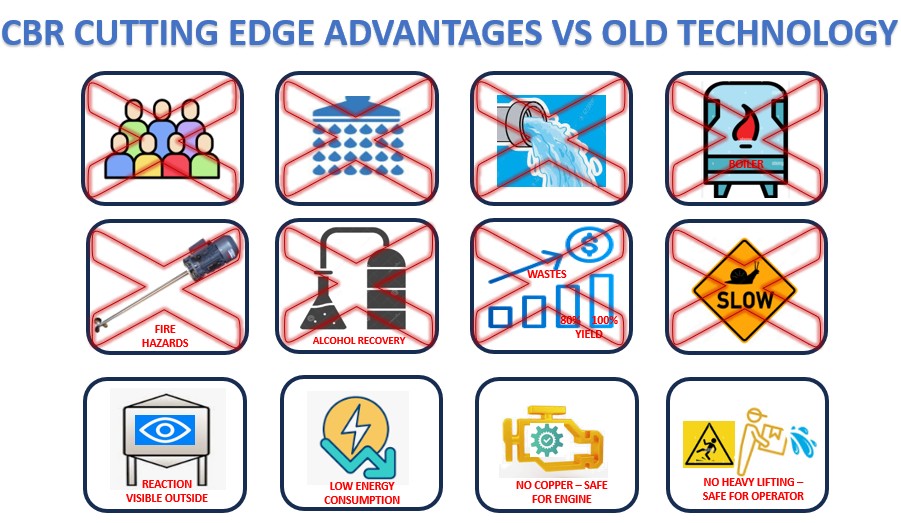
What sets it apart is not the chemistry itself but how little the process now demands. Conventional biodiesel brewing used to take about three days. The patented Capistrano Biodiesel Reactor, or CBR, does it in 28 minutes. It needs no expensive equipment and no wastewater treatment, produces zero waste, and can be run by a single person. Production costs about P8 per liter. Add P12 per liter for the operator’s earnings, and the fuel sells at P20, which is where the name Benteng Diesel comes from.
For the Filipino chemist, the real breakthrough is who gets to run it. Biodiesel used to be the domain of chemists, chemical engineers, and scientists. Now, he says, “as the process is simple even a regular person can produce biodiesel.”
Big names are already on his client list, among them the Department of Science and Technology, PNOC, Shell, and provincial bus company Jam Liner, alongside restaurants and waste management firms. The people he most wants to reach, though, are the ones he sees losing ground to fuel costs: jeepney drivers who have stopped plying their regular routes and farmers who leave their harvests to rot because hauling them to the cities no longer pays.
Cooking oil today, fuel for the day
Ricardo has more than 70 clients, but the one he talks about first is not a corporation. Carol Burns runs a nongovernmental organization in Daang Bakal, Mandaluyong City, with a community project called Palit Mantika.
The arrangement is simple. Wives of jeepney drivers on the Mandaluyong–Divisoria route collect used cooking oil from around the community and bring it to Carol, who swaps it for CBR biodiesel to fuel that day’s trips.
“We share the same advocacy,” the inventor says, listing what the project delivers at once: cleaner emissions, better engine performance, recycling, and less used oil clogging sewers and worsening floods.
A career spent in other people’s laboratories
Fuel has been on his mind since his student days. The Manila-born chemist finished his BS in Chemistry at the University of Santo Tomas in 1980 on a full government scholarship, with a thesis on producing octane from plant alcohols. He passed the chemistry board exam right after graduation and went straight to work.
IRRI came next, from 1981 to 1989, first as a researcher and later as the officer in charge of its radioisotope laboratory. There, he designed a carbon-14 sample oxidizer for about $200 that could stand in for commercial equipment worth $27,000. His research on organic matter and rice yield won a best research award in nuclear science, and he earned his master’s degree from the University of the Philippines as an IRRI scholar.
The years that followed took him through Bayer, Reckitt & Colman, Drugmakers, and nearly two decades at DiverseyLever and its successor companies, from 1999 to 2018. He became a technical manager at 33.
The masterpieces he cannot sign
Biodiesel is only the most visible part of that career. Ricardo has 232 consumer products to his name, a body of work his UST College of Science alumni recognized with a TOAST award in 2026. A few are household names, including Baygon Waterbased, Bayfresh, and Eskinol. Most of the formulations, however, belong to the companies that paid for them. Not being able to share these with his own community, he admits, is his main frustration.
One he will talk about is Peel Off. Peeling papaya was a stubborn bottleneck in fruit cocktail production. His edible solution changed that: the fruit takes a short dip as it travels down the conveyor belt and comes out peeled. When Del Monte and Dole first used it, he recalls, their foreign executives praised what he describes as a world-first process.
“Proudly Pinoy made,” the chemist says.
His foundation for that kind of problem-solving, he says, was built at IRRI. “My years in IRRI taught me that the potential of research is unlimited specially when you’re supported financially and modern equipment are available.”
Planning as a way forward
Scholarships carried the CRD on Biotechnology chief through all three of his degree programs, the third a research master’s in mechanical engineering at Victoria University in Melbourne, where his thesis turned to hydrogen and biodiesel. He has spent around 12 years abroad, mostly in stretches, across Australia, Guam, American Samoa, Germany, England, Saipan, Japan, Korea, China, and Palau.
When he guides young students, he does not start with science. “When you love what you’re doing, even if it’s not science, there would always be a way to pursue it,” Ricardo says. “Just be resourceful, creative and plan.”
His practical advice is aimed at students whose parents cannot afford college. Work hard for good grades in senior high, he tells them, because those grades open the door to the many scholarships schools offer. Long preparation, in his experience, is what makes the difference.
That same thinking runs through the livelihood trainings he leads with Christian Crusaders Pilipinas, a group he helped found with friends who share his advocacy. He has taught soap and detergent making, mushroom cultivation, and biogas and biodiesel production in Cabuyao. In Australia, he taught perfume and candle making to older residents as a volunteer. Once a month, he also explains chemistry, science, and technology on radio. Working alone, he says, takes sacrifice. Working together makes it lighter.
“I believe that these are everyone’s responsibility to lift our brothers,” the 67-year-old says. “We collectively lift our lives by lifting others around us.”
What 45 years of chemistry teaches
Chemistry is a field with real dangers, and Ricardo credits safe planning and close observation for carrying him through 45 years in it. He reads the events around him as signals, clues from the Almighty about problems he might one day solve for other people. Innovation and integrity, he says, have to follow.
He borrows Thomas Edison’s line that invention is 99 percent perspiration and 1 percent inspiration, and his hope is modest: that his publications, inventions, and products will make someone’s life easier.
His mantra is shorter still. “Carpe Diem,” he says. “If your goals will benefit the community, it’s already halfway done!”
Help this knowledge grow
Have additional information, a correction, or a supporting resource for this article?
Try the form and preview your contribution. Nothing is submitted or saved. Closing the form or leaving this page clears your draft.