
Agriculture, Technology
Weaving new opportunities from pineapple waste
Nestled in the heart of the Western Visayas, the province of Iloilo has earned a sweet reputation as a rising powerhouse for pineapple production, driven primarily by the sweeping plantations of Passi City.
Pineapple leaves are finding a new purpose after years of being left to rot in the fields. What farmers once considered waste is now being turned into natural fibers that can help support their livelihood and bring new life to the province’s traditional weaving industry.
Passi City and the neighboring town of Lemery are known for their pineapple plantations. For many farmers, selling the fruit is their main source of income. But after every harvest, piles of leaves are left behind to rot.
“Before, we just threw them away,” one farmer said. Now, thanks to science and technology, those same leaves are becoming an additional source of income for the farmers.
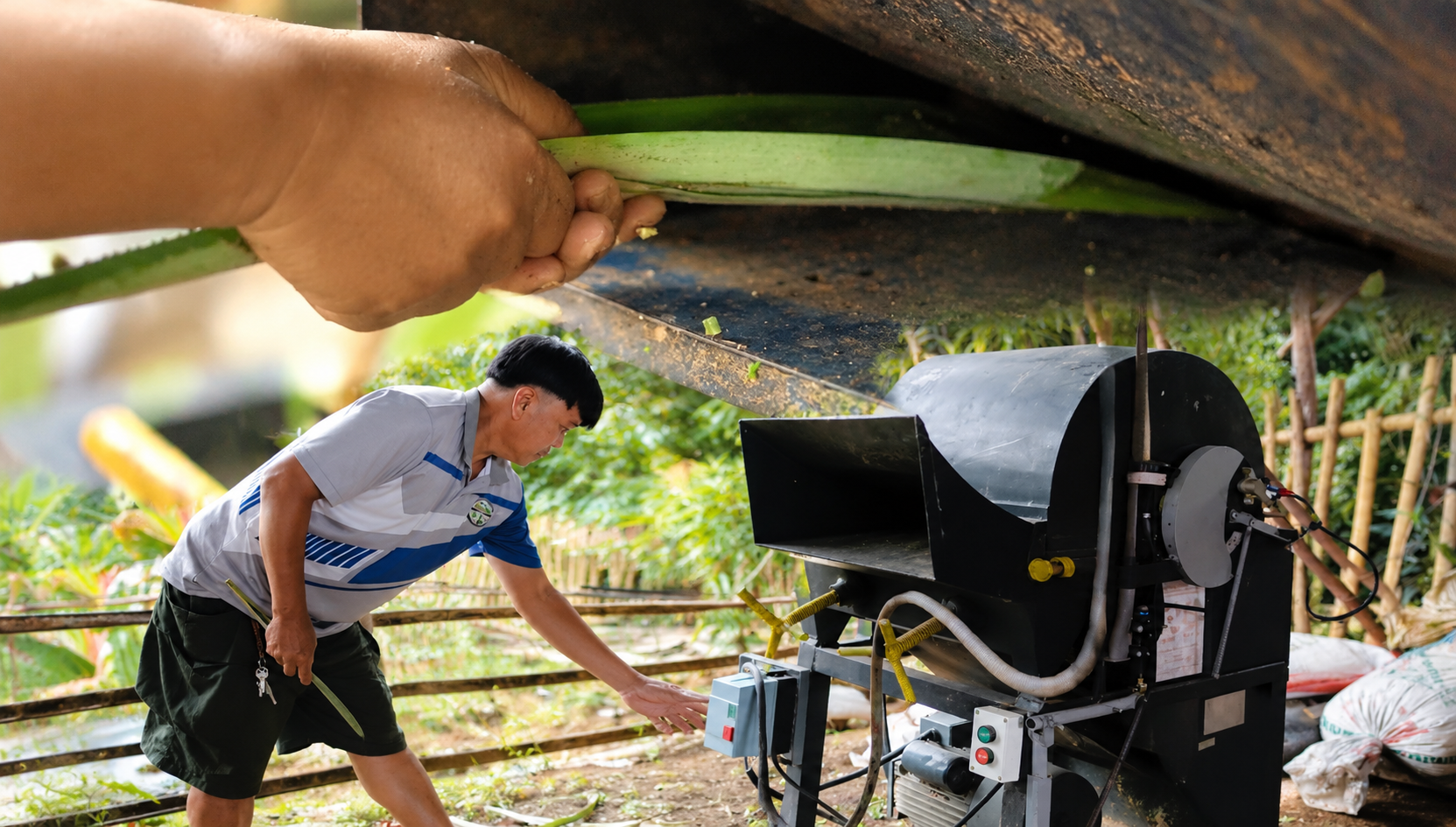
Through the Department of Science and Technology’s (DOST) Community Empowerment through Science and Technology (CEST) program, in partnership with Iloilo Science and Technology University (ISAT-U), farmers in Passi City received pineapple leaf decorticating machines. These machines extract fibers from the leaves, which can then be used to make textiles.
One of the project partners recalled how the team saw potential in the discarded leaves due to the large pineapple plantations in Passi and Lemery. The idea was simple: provide farmers with the equipment, train them to use it, and show them that something they used to throw away could turn into something of value. The results have been encouraging. According to a project representative, processed pineapple fibers can sell for as much as ₱400 per kilogram.
From zero to nothing, now it has value.
But turning leaves into fibers is only the beginning. To make the project work, the fibers need to reach the people who can turn them into useful products. From the farms, the extracted fibers are brought to the Regional Yarn Production and Innovation Center (RYPIC) in Miagao, Iloilo. There, they undergo further processing before being supplied to local weaving communities.
One of the beneficiaries is Barangay Baraclayan, where residents have been working to bring back hablon, the traditional handwoven textile of Iloilo.
The community’s weaving tradition had been at risk as many of its experienced weavers grew older. Residents began to revive the activity in 2017 with training provided by the DOST. By mastering modern designs and advanced techniques, the artisans have elevated the quality of their work, transforming traditional weaving into a highly rewarding and sustainable livelihood
Today, pineapple fiber is blended with cotton to produce fabric made up of 70 percent cotton and 30 percent pineapple fiber. The material can be used for barong, Filipiniana dresses, scarves, placemats and other products.
A ₱1.5 million grant from the DOST was also given to the weaving center, for equipment upgrades to help the community keep up with demand.
As one project partner pointed out, the effort is not just about increasing income through science and technology. It is also about preserving a craft that has long been part of Ilonggo culture.
The project also shows that providing machines is not enough. That requires the cooperation of weavers and fiber processors and farmers to keep the supply chain moving. “We need the right amount of raw materials, people with the right skills and people willing to buy locally made products.”
Another challenge is engaging younger people to learn weaving. The passing on of skills has become as important as improving the equipment as many experienced weavers age. The intent is to help a new generation understand the science of the plants, fibers and fabrics they work with as well as how to weave.
The journey of pineapple leaves in Iloilo shows what can happen when science meets local knowledge. A material once left behind after harvest is now helping farmers earn extra income, providing raw materials for weavers and supporting the revival of a traditional industry.
One farmer expressed his gratitude for the project, the machine had helped improve their livelihood and brought additional income to the community.
It may be a simple but meaningful reminder that sometimes, new opportunities are already around us. We just need to find a better way to use what we have.
In Iloilo, what was once considered agricultural wastes, are now being woven into something more valuable than a fabric: a livelihood for families and a renewed future for a local tradition.
Help this knowledge grow
Have additional information, a correction, or a supporting resource for this article?
Try the form and preview your contribution. Nothing is submitted or saved. Closing the form or leaving this page clears your draft.